Source Carbide Internal Grooving Tool Holder for Metal Cutting
Compare 30 carbide internal grooving tool holder options from manufacturers in Zhuzhou, China. Buyers can evaluate specifications like hardness, thread types, and movement methods for metal-cutting applications.
Key considerations
Products List






Comprehensive Sourcing Guide
Strategic Sourcing Guide for Carbide Internal Grooving Tool Holders
Understanding Technical Specifications and Performance Classifications
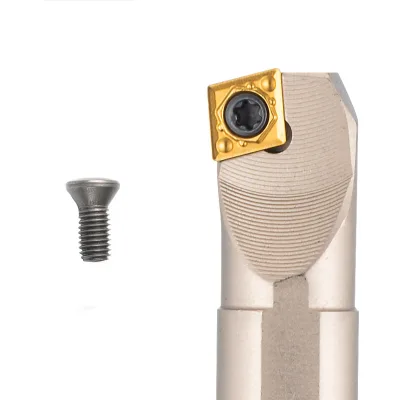
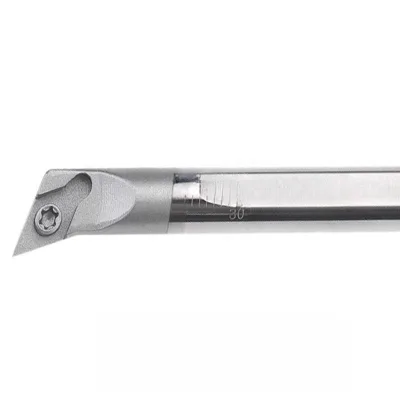
When sourcing carbide internal grooving tool holders, buyers must first establish a clear understanding of the technical specifications that define performance in high-precision machining environments. The core keyword, carbide internal grooving tool holder, refers to a specialized cutting tool designed to create narrow, precise grooves on the internal surfaces of workpieces, typically in metal applications. Based on observed market data, these tools are often categorized under high-end CNC machine tools, indicating their suitability for demanding manufacturing processes where accuracy and durability are paramount.
A critical aspect of technical evaluation is the movement method and control system. The market presents a dichotomy in control strategies, with some units utilizing open-loop control systems while others are designed for point-to-point control. Buyers must align the tool's control method with their existing CNC machinery. For instance, an open-loop control system may be sufficient for certain general-purpose operations, whereas point-to-point control might be required for specific, high-precision grooving tasks. Furthermore, the numerical control capability is a defining feature, with many suppliers offering CNC/MNC (Multi-Function Numerical Control) variants. This ensures that the tool holder can integrate seamlessly into automated production lines, facilitating complex contour control movements necessary for intricate internal geometries.
The physical dimensions of the tool holder are equally vital for compatibility. Observed specifications indicate a significant range in length, typically spanning from 80mm to 500mm, allowing for flexibility in deep-grooving applications versus shallow recess operations. The diameter of the shank also varies, commonly ranging from 8mm to 42mm, which dictates the maximum depth of cut and the rigidity of the setup. For specific models, such as those designated with the TNMG or M16 series, the dimensions are often standardized to match specific insert geometries. The hardness of the carbide material is another non-negotiable specification; observed data points to hardness values ranging from HRC 43-47 for certain steel components up to 89.5~92.7 HRA for the carbide inserts themselves. This high hardness is essential for maintaining the cutting edge integrity when machining abrasive metals.
Compliance, Certification, and Material Integrity
In the B2B procurement of industrial tooling, compliance and material integrity serve as the bedrock of risk management. Buyers should prioritize suppliers who can demonstrate adherence to international quality standards. The market data indicates a strong prevalence of ISO 9001 certification, with some listings explicitly mentioning ISO 9001 alongside SGS verification. Additionally, certain product lines carry CE certification, which is crucial for equipment intended for the European market or for meeting specific safety directives. It is imperative for buyers to verify that the certification is current and applies specifically to the manufacturing facility producing the tool holders, rather than just a general company statement.
Material composition is a primary driver of tool longevity and performance. The supplied facts highlight that high-quality tool holders are often constructed from 100% raw materials, with specific references to 42CrMo steel for the holder body. This alloy is selected for its excellent mechanical properties, including high strength and toughness, which are necessary to withstand the high cutting forces and vibrations inherent in internal grooving operations. The carbide inserts, which are the cutting elements, are noted for their excellent wear resistance. This attribute is directly linked to the hardness specifications mentioned earlier and ensures that the tool maintains its dimensional accuracy over extended production runs.
Buyers must also scrutinize the customization capabilities of the supplier. While standard products are available, the ability to customize is a significant advantage in specialized manufacturing. The data shows that customization is widely available, with options for standard or customized packing, and the ability to tailor the product standard to specific client requests. This flexibility allows manufacturers to adapt tooling to unique production requirements, such as specific thread types (M4 through M20) or specialized groove widths (e.g., 3mm). However, customization should not come at the expense of quality assurance; therefore, verifying that the customized components still meet the core material and hardness standards is essential.
Cost Drivers and Pricing Dynamics
The pricing of carbide internal grooving tool holders is influenced by a complex interplay of factors, including material costs, manufacturing complexity, and the level of customization required. The observed price range in the market is extensive, spanning from $0.10 to $255.00 USD. This wide variance reflects the diversity of products available, from simple, standard inserts to complex, high-end CNC tool holders with advanced features. The lower end of the spectrum likely corresponds to standard, off-the-shelf components or smaller inserts, while the higher end represents specialized, high-performance units with custom geometries or advanced coatings.
The Minimum Order Quantity (MOQ) is another critical cost driver. Market observations show an MOQ range from 1 piece to 100 pieces. Some suppliers offer highly flexible terms, stating that "1 PCS Is Ok," which is beneficial for prototyping, small-batch production, or initial quality testing. Conversely, other suppliers may require higher volumes to achieve optimal unit pricing. Buyers should calculate the total cost of ownership, which includes not only the unit price but also the impact of MOQ on inventory carrying costs. For instance, ordering a high volume to secure a lower unit price might be cost-effective for a high-utilization line, but it could tie up capital for a low-volume, high-mix operation.
Additionally, the production process and technology level significantly impact cost. Products utilizing advanced technology and categorized as high-end CNC machine tools generally command a premium. The inclusion of features like high anti-vibration capabilities or exchangeable components adds value but also increases the manufacturing cost. Buyers must balance the upfront investment against the long-term savings gained from reduced downtime, higher machining speeds, and extended tool life. It is advisable to request detailed quotes that break down costs by material, machining time, and any customization fees to ensure transparency in pricing.
Typical Applications and Process Usage
Carbide internal grooving tool holders are engineered for a specific set of industrial applications, primarily within the metalworking sector. The core process usage includes metal-cutting CNC machine tools, metal-forming CNC machine tools, and CNC non-conventional machine tools. This versatility allows them to be employed in a wide array of manufacturing scenarios, from automotive component production to aerospace part fabrication. The ability to handle both cutting and forming processes makes these tool holders a valuable asset for facilities looking to streamline their operations and reduce the number of different tooling types required.
The specific application is often dictated by the thread type and groove dimensions. The market offers tool holders compatible with a wide range of thread types, including M4, M5, M6, M8, M10, M12, M16, and M20. This range ensures that the tooling can be used for various fastening and assembly requirements. Furthermore, the processing groove width and range are critical parameters. For example, a specific model might be designed for a groove width of 3mm with a processing range of 90-140mm. Buyers must match these specifications to their workpiece requirements to ensure that the tool can achieve the desired geometry without compromising the structural integrity of the part.
The material compatibility is another key application factor. The primary application is listed as "Metal," indicating that these tools are optimized for machining ferrous and non-ferrous alloys. The high hardness and wear resistance of the carbide material make them particularly suitable for machining hardened steels and other abrasive materials. The high anti-vibration performance is a specific advantage for applications where surface finish and dimensional stability are critical, such as in the production of hydraulic components or precision engine parts. By selecting the right tool holder for the specific metal and groove requirements, manufacturers can achieve superior surface finishes and tighter tolerances.
Supplier Evaluation and Origin Verification
Evaluating suppliers for carbide internal grooving tool holders requires a rigorous assessment of their capabilities, history, and geographic location. The origin of the product is a significant indicator of supply chain stability and quality consistency. The majority of the observed data points to Zhuzhou, Hunan, China, as the place of origin. Zhuzhou is widely recognized as a global hub for carbide production, often referred to as "The World Carbide Production" center. This concentration of expertise suggests that suppliers based in this region are likely to have access to high-quality raw materials and advanced manufacturing techniques.
When evaluating a supplier, buyers should look for evidence of a long-standing presence in the industry. One of the key advantages listed by suppliers is "Over 20 Years Experiences in This Line." This tenure suggests a deep understanding of the nuances of carbide tool manufacturing and a proven track record of delivering reliable products. A manufacturer business type is preferred over a trading company, as it implies direct control over the production process, quality control measures, and technical support. The ability to provide a "Brand Name" such as "Sant" also indicates a level of brand accountability and market presence.
Buyers should also verify the supplier's capacity for customization and their response to specific client requests. The data shows that suppliers offer "Standard or Customised" packing and can accommodate "According to Customers Requestment" for various specifications. This flexibility is crucial for buyers with unique requirements. Additionally, the availability of matching inserts, such as the Ztgd0404-Mg, indicates that the supplier offers a comprehensive ecosystem of compatible components, which simplifies the procurement process and ensures optimal tool performance.
Quality Control and Long-Term Procurement Considerations
Implementing a robust quality control (QC) protocol is essential for ensuring the reliability of carbide internal grooving tool holders. The observed standards, such as ISO 9001 and SGS, provide a framework for quality management, but buyers must go beyond checking for certificates. They should request specific test results or performance data related to hardness, wear resistance, and dimensional accuracy. The hardness range of 89.5~92.7 HRA for carbide and HRC 43-47 for steel components should be verified through independent testing or mill certificates.
Long-term procurement considerations involve building a sustainable relationship with suppliers that can support evolving production needs. The "Advanced" technology mentioned in the product attributes suggests that the industry is moving towards more sophisticated tooling solutions. Buyers should look for suppliers who are committed to continuous improvement and innovation. The availability of "Exchangeable" components is a significant long-term advantage, as it allows for easy replacement of worn parts without discarding the entire tool holder, thereby reducing waste and operational costs.
Furthermore, the condition of the product is a critical factor. All observed listings specify the condition as "New," which is standard for industrial tooling. However, buyers should ensure that the "New" condition implies that the tools are free from defects and have not been previously used or refurbished. The packaging, whether "Standard" or "Customised," plays a role in protecting the tool during transit and storage. Proper packaging ensures that the delicate carbide edges remain intact and that the tool is ready for immediate use upon arrival. By prioritizing suppliers with strong QC protocols, advanced technology, and a commitment to quality, buyers can secure a reliable supply chain for their carbide internal grooving tool holder needs.
Comparative Analysis of Tool Holder Attributes
To facilitate a clearer decision-making process, the following table summarizes the key attributes observed in the market for carbide internal grooving tool holders. This comparison highlights the variability in specifications and helps buyers identify the features most relevant to their specific applications.
| Attribute Category | Observed Specification Range | Key Considerations for Buyers |
|---|---|---|
| Control Method | Open-Loop, Point to Point | Match with existing CNC machine controller capabilities. |
| Movement Method | Contour Control, Point to Point | Contour control is essential for complex internal geometries. |
| Material | 42CrMo (Holder), 100% Raw Material (Carbide) | Verify raw material certificates for hardness and toughness. |
| Hardness | HRC 43-47 (Steel), 89.5~92.7 HRA (Carbide) | Higher hardness correlates with longer tool life in abrasive metals. |
| Length | 80mm ~ 500mm | Select based on required depth of cut and machine spindle clearance. |
| Diameter | 8mm ~ 42mm | Ensure shank diameter fits the tool holder turret or chuck. |
| Thread Type | M4 to M20 | Match thread specifications to the workpiece requirements. |
| Certification | ISO 9001, SGS, CE | Verify current validity and scope of certification. |
| Origin | Zhuzhou, Hunan, China | Leverage the expertise of the carbide production hub. |
| Customization | Available (Packing, Standard, Model) | Confirm lead times and costs for non-standard requests. |
This table serves as a quick reference for buyers to cross-reference their technical requirements against the available market offerings. By systematically evaluating these attributes, procurement teams can make informed decisions that balance performance, cost, and reliability.
FAQs
What certifications do carbide internal grooving tool holders have?
Most products carry ISO 9001 certification, with some listings also including SGS and CE marks. These standards verify that the manufacturing facility adheres to international quality management systems and safety directives for European markets.
Which material is used for the tool holder body?
The holder body is constructed from 42CrMo steel, selected for its high strength and toughness. This alloy ensures the tool can withstand the high cutting forces and vibrations inherent in internal grooving operations on metal.
Can buyers customize the product specifications and packing?
Yes, customization is widely available for specifications, thread types, and packing methods. Suppliers offer standard or customized packing and can tailor product standards to specific client requests while maintaining core material and hardness requirements.
What is the minimum order quantity for these tool holders?
The minimum order quantity ranges from 1 piece to 100 pieces depending on the supplier. Some vendors accept single-piece orders for prototyping, while others may require higher volumes to optimize unit pricing for bulk production runs.
Where are these carbide tool holders manufactured?
The primary place of origin is Zhuzhou, Hunan, China, a global hub for carbide production. Suppliers in this region benefit from access to high-quality raw materials and advanced manufacturing techniques concentrated in the local industry.
What is the hardness range of the carbide inserts?
The carbide inserts exhibit a hardness range of 89.5 to 92.7 HRA, ensuring excellent wear resistance. This high hardness is essential for maintaining cutting edge integrity when machining abrasive metals in high-end CNC applications.